


Goldenrod
The Golden Gift of Autumn

A slower, softer ritual
Root medicine, preserving season, fall fungi, Fire Cider, Garlic Honey, warming meals, autumn olive, eastern white pine, pup wellness, and grounded seasonal care.
YOUR JOURNEY THROUGH FALL


A SLOWER, SOFTER RHYTHM
Fall is the season of return. After the brightness and outward energy of summer, fall invites us to gather ourselves back in.
The body begins asking for steadiness, nourishment, rhythm, and preparation.
At Coastal Root, Fall Grounding is about coming back to what holds us: roots, food, fire, herbs, home, family, animals, immune-season preparation, preservation, and the rituals that help the body and mind feel anchored.
Fall is not only a season of harvest, it is a season of remembering what supports us.

Fall wellness is not about shutting down, It is about rooting down.
One of the deepest lessons of fall is that the season grows medicine below the surface—but not only below the surface.
As plants pull their energy back into roots, berries, seeds, bark, leaves, needles, and fungi, fall becomes a powerful time to think about root medicine, mineral-rich foods, warming preparations, mushrooms, broths, vinegars, ferments, canning, tinctures, dried herbs, preserved foods, and long-steeping seasonal preparations.
This is the season of burdock, dandelion root, ginger, turmeric, horseradish, garlic, onion, thyme, rosemary, apples, cranberries, autumn olive berry and leaf, goldenrod, wild lettuce, calico aster, grape leaves, mushrooms, squash, pumpkin, eastern white pine needles, mineral broths, bone broth, apple cider vinegar, and raw honey.
The foods and herbs of fall are often denser, stronger, warmer, more aromatic, more resinous, or more grounding than the foods of spring and summer.
🍃 Spring gives us tender greens.
🍃 Summer gives us water, berries, flowers, and cooling herbs.
🍃 Fall gives us roots, fire, preservation, minerals, fungi, berries, late flowers,
seeds, needles, and depth.
That is part of the wisdom of seasonal living.
Fall does not only prepare the land for winter, it teaches us how to prepare ourselves.
This is the time of year when kitchens begin to look like apothecaries and pantries at the same time. Jars fill with sauces, vinegars, broths, ferments, infused honeys, dried herbs, seasonal syrups, shrubs, preserved fruits, mushrooms, roots, tinctures, and long-steeping preparations that help carry the harvest forward.
Some preparations are ready quickly. Others, like Fire Cider and Garlic Honey, need time to develop. That makes them especially fitting for fall: you begin them when the roots, garlic, honey, vinegar, and warming herbs feel most aligned with the season, then let them deepen as the weather cools.
Preserving is more than storage. It is a seasonal ritual.
It asks us to slow down, handle ingredients with care, label what we make, and think ahead. It turns abundance into something useful. It lets us enjoy the season longer than the season itself.
At Coastal Root, this rhythm is central to fall. We do not force the shelves to stay the same all year. We make what the season offers, preserve what we can, and allow certain products to belong to a specific time and place.
Because fall brings cooler weather, shorter days, heavier meals, damp mornings, changing routines, and the beginning of immune-season preparation, we look to ingredients that feel warming, grounding, mineral-rich, pungent, bitter, earthy, aromatic, and strengthening.
Burdock root, Dandelion root, Ginger, Horseradish, Turmeric
Thyme, Rosemary, Sage, Yarrow, Goldenrod, Wild lettuce, Violet leaf, Autumn olive leaf, Calico aster, Eastern white pine needles, Grape leaves, Mineral-rich herbs
Apples, Cranberries, Elderberry, Autumn olive berries, Pumpkin, Squash
Garlic, Onion
Cayenne, Clove, Cinnamon, Spicebush
Black walnut hulls, Mushrooms
Raw honey, Apple cider vinegar, Bone broth
Fall ingredients should feel deeper and more substantial. They are not meant to feel light and fresh like spring, or cooling and bright like summer. They are meant to help us settle, warm, digest, prepare, preserve, and ground.
Some are kitchen ingredients. Some are tincture plants. Some are wild foods. Some are better dried for later. Some are native to our region, while others, like autumn olive, are abundant non-native plants that can still become part of a thoughtful seasonal harvest.
Fall is a powerful season for noticing what remains when the showier parts of the year begin to fade.
As the landscape shifts into shades of amber, gold, and rust, an extraordinary collection of wild plants, roots, berries, nuts, and mushrooms becomes easier to recognize. Many have histories in traditional herbal medicine, seasonal cooking, and food preservation.
Some of the most interesting fall finds across our coastal region include:
Fall is also mushroom season.
As temperatures cool and moisture returns to the landscape, woods, fallen logs, stumps, and even our own backyards can offer some of the most fascinating seasonal foods.
Honey mushrooms, Chicken of the Woods, Hen of the Woods, and Turkey Tail are among the interesting fungi that may appear across our region.
Honey Mushrooms
Honey mushrooms have a rich, earthy flavor and hold their texture beautifully when prepared properly.
Before sautéing or adding them to a recipe, boil them for 10 minutes first, drain off the water, and then cook them into whatever dish you are making.
Honey mushrooms require careful identification because several species and lookalikes exist, including poisonous mushrooms. Some people experience gastrointestinal upset even after cooking.
Chicken of the Woods
With its vibrant orange and yellow coloring, Chicken of the Woods is one of the more visually distinctive woodland mushrooms.
When young and tender, it can be surprisingly close to chicken in texture—especially when sautéed until golden with butter, bacon fat, garlic, salt, and pepper.
Proper identification and thorough cooking remain important, and some individuals may experience digestive reactions even when it is correctly identified.
Hen of the Woods
Also known as Maitake, Hen of the Woods grows in beautiful, overlapping clusters, often near the bases of oak trees.
Its earthy flavor and tender texture make it a favorite for roasting, sautéing, soups, and hearty autumn dishes.
Hen of the Woods has also attracted scientific interest for its naturally occurring polysaccharides, including beta-glucans.
Turkey Tail
Recognizable by its colorful, fan-shaped bands, Turkey Tail is a common sight on fallen logs and decaying wood.
Unlike culinary mushrooms enjoyed for their texture, Turkey Tail is especially known for its history in traditional preparations and modern research involving fungal polysaccharides.
Its tough, leathery texture makes it unsuitable for ordinary sautéing, and it is commonly studied in extracted preparations rather than eaten as a typical mushroom.
There is something deeply grounding about gathering food from the place you live, cleaning it, cooking it slowly, and turning it into a seasonal meal.
Wild greens can become nourishing additions to soups. Roots can be roasted or incorporated into broths. Berries can be transformed into preserves, shrubs, and syrups. Mushrooms can add rich, earthy flavor to comforting autumn dishes.
Some ingredients are best enjoyed fresh, while others require drying, cooking, fermentation, canning, or careful preparation.
These seasonal practices connect the kitchen to the land while encouraging us to appreciate what nature provides.
The point is not to harvest everything.
The point is to understand that fall medicine and nourishment often look less delicate than spring's offerings.
Some of the most remarkable botanical discoveries begin simply by slowing down and noticing what is growing around us.
Only harvest plants, roots, berries, needles, or mushrooms that you can identify with complete confidence.
Mushrooms require extra caution. Cross-reference reliable identification resources, examine multiple distinguishing characteristics, and seek confirmation from an experienced local expert when appropriate. Photographs and identification apps alone are not sufficient.
Always gather from clean locations. Avoid roadsides, sprayed lawns, industrial areas, herbicide-treated rights-of-way, and places exposed to runoff or pet waste.
Research each plant or mushroom's specific preparation requirements before consumption. Not every wild botanical is edible, and cooking does not make poisonous species safe.
When in doubt, leave it out.
At Coastal Root Co., we believe nature's abundance begins with awareness. The more we learn to recognize the plants, fungi, and foods growing around us, the deeper our connection becomes to the seasons and the land we call home.
Slow down. Look closer. Discover what's growing around you.
Fall is a season of letting go, but not in a rushed or forced way.
Choose one thing that feels complete: a project, a habit, a pile, a commitment, a worry, a drawer, a schedule pattern, or an old version of yourself that no longer fits.
Write it down.
Then write what you want to root into instead.
This is not about dramatic reinvention. It is about making space for what will actually sustain you through the colder months.
Seasonal intention:
Release what is draining you and root into what restores you.
Fall is the season when fire becomes medicine in the home.
Light a candle, sit by a fire, simmer herbs on the stove, or turn on warm lamps instead of harsh overhead lights. Let the shift in light tell your body that the day is ending.
Try this in the evening:
• Dim the lights.
• Put your phone down for 10 minutes.
• Light a candle or sit near warm light.
• Sip tea, broth, or warm water.
• Exhale slowly and let the house settle.
Seasonal intention:
Use warmth and light to tell the nervous system it is safe to slow down.
Fall foods tend to get heavier: roasted meats, roots, soups, stews, grains, squash, breads, and holiday meals.
Bitters have a long tradition of being used before meals to wake up digestion. This can be as simple as bitter greens, dandelion root tea, a splash of apple cider vinegar in water, or a small bitter tincture before a heavier meal.
Seasonal intention:
Prepare the body before asking it to digest more.
Choose one day in fall to make the kitchen feel like an apothecary.
Wash roots. Chop garlic. Start vinegar. Make broth. Dry herbs. Fill jars. Label what you made. Put on music. Let the kitchen become the center of seasonal care.
Ideas for a root medicine kitchen day:
• Simmer mineral broth
• Dry orange peels
• Chop and freeze ginger
• Infuse vinegar with herbs
• Roast squash or root vegetables
• Prepare a jar of herbal tea blend
• Gather eastern white pine needles for tea
• Dry late-season botanicals
• Prepare a seasonal tincture
• Make a fall dog topper base for the week
Seasonal intention:
Turn preparation into ritual.
Canning can feel like work, but it can also become one of the most grounding rituals of fall.
Clear the counter. Wash the jars. Lay out the towels. Put on music. Simmer the sauce, fruit, syrup, or broth. Label each jar with the date and what went into it.
A row of jars is more than food storage. It is proof that you listened to the season and put something away for later.
Seasonal intention:
Preserve the season before it passes.
Fall teaches us to work with less light.
Instead of resisting the earlier darkness, create a small transition practice around sunset.
Try this:
1. Notice when the light starts to fade.
2. Step outside or look out a window.
3. Take 5 slow breaths.
4. Ask, “What needs to be finished today, and what can wait?”
5. Choose one small closing action.
This could be shutting down the kitchen, setting out tea, feeding the dog, closing the curtains, or writing tomorrow’s first task.
Seasonal intention:
Let the day end instead of dragging it behind you.
Fall is a good time to bring attention back to the feet.
Cold feet, tense legs, and tight hips can make the whole body feel unsettled. A simple foot ritual can become a grounding practice.
Try this:
1. Soak feet in warm water.
2. Add mineral salt, magnesium flakes, or small herbal foot soak.
3. Dry the feet fully.
4. Massage with oil, balm, or body butter.
5. Put on warm socks.
Seasonal intention:
Ground the body from the bottom up.
Fall has a deeper sound than summer.
Instead of bright, airy music, try low steady sounds: soft drumming, humming, chanting, cello, singing bowls, ocean waves, rain sounds, or slow instrumental music.
Humming can be a simple way to lengthen the exhale and bring awareness back into the body.
Try this:
1. Inhale through the nose.
2. Hum gently on the exhale.
3. Repeat for 5 rounds.
4. Notice the vibration in the chest, throat, or face.
Seasonal intention:
Use sound to bring the body inward.
Try adding one or two of these into your fall rhythm:
• Keep Coastal Root Garlic Honey and Fire Cider in the kitchen as seasonal staples.
• Begin long-steeping preparations before you need them.
• Start one jar of something: vinegar, honey, broth, tea blend, syrup, sauce, or dried herbs.
• Add warming spices like ginger, turmeric, cinnamon, cayenne, rosemary, or thyme to meals.
• Sip broth, pine needle tea, or herbal tea in the evening instead of cold drinks.
• Use bitters, bitter greens, or apple cider vinegar before heavier meals when appropriate.
• Roast root vegetables once a week.
• Create a fall care basket with Fire Cider, Garlic Honey, tea, tinctures, broth, balm, and cozy socks.
• Take a slow sunset walk as the light changes.
• Use candlelight or warm lamps in the evening.
• Try a warming foot soak before bed.
• Make one soup, stew, broth, roasted meal, or skillet dinner each week.
No FAQs found. Try another search or category.
Nature's wisdom in every season. As summer fades, a remarkable collection of plants continues to thrive across our fields, forests, and coastal landscapes. From goldenrod's brilliant yellow blooms to autumn olive's ruby-colored berries, these seasonal botanicals have long held a place in traditional herbal practices. Explore their identifying characteristics, historical uses, harvesting traditions, and the many ways they connect us to nature's changing rhythms.
The Golden Gift of Autumn
Solidago spp. | Asteraceae Family
As summer fades, fields, meadows, and coastal landscapes glow with goldenrod's brilliant yellow blooms. This remarkable wildflower has a long history in traditional herbal medicine, valued for its versatility, naturally occurring plant compounds, and importance to late-season pollinators.
Its botanical name, Solidago, comes from the Latin solidare, meaning "to make whole" or "to strengthen."
These uses reflect historical practices and botanical research; human evidence varies by species and preparation.
Goldenrod contains naturally occurring flavonoids, saponins, tannins, phenolic acids, and aromatic compounds. These constituents contribute to its traditional applications and continued scientific interest.
Recognized by its clusters of golden-yellow flowers and upright stems, goldenrod flourishes in sunny meadows, woodland edges, and coastal habitats from late summer into autumn.
Harvest fresh flowering tops and healthy upper leaves from clean, unsprayed locations. Dry promptly in a shaded, well-ventilated area, leaving plenty of blossoms for pollinators.
Did You Know? Goldenrod is frequently mistaken for the cause of fall allergies. Unlike ragweed, which releases windborne pollen, goldenrod is primarily insect-pollinated and generally isn't responsible for seasonal hay fever.
Goldenrod has traditionally been enjoyed as an herbal tea, preserved as a tincture, or incorporated into botanical oils, washes, and compresses.
Coastal Root Goldenrod Tincture: Inspired by traditional herbal practices, our small-batch botanical extract captures the character of goldenrod's flowering aerial parts in a convenient liquid preparation. An intentional way to incorporate this remarkable seasonal plant into your personal herbal routine.
Goldenrod's traditional uses are especially associated with urinary wellness and fluid balance, although these benefits have not been clinically established for every Solidago species or tincture preparation.
Beyond its herbal heritage, goldenrod provides valuable late-season nectar and pollen for bees, butterflies, and other beneficial insects, making it an essential part of thriving autumn ecosystems.
Botanical Considerations: Individuals sensitive to the Asteraceae family should use caution. Consult a qualified healthcare professional before internal use if pregnant, nursing, taking medications, or managing kidney, heart, or fluid-balance conditions.
At Coastal Root Co., we celebrate the plants that connect traditional knowledge with the natural rhythms of our coastal landscape.
Rooted in tradition. Inspired by nature. Grounded in every season.
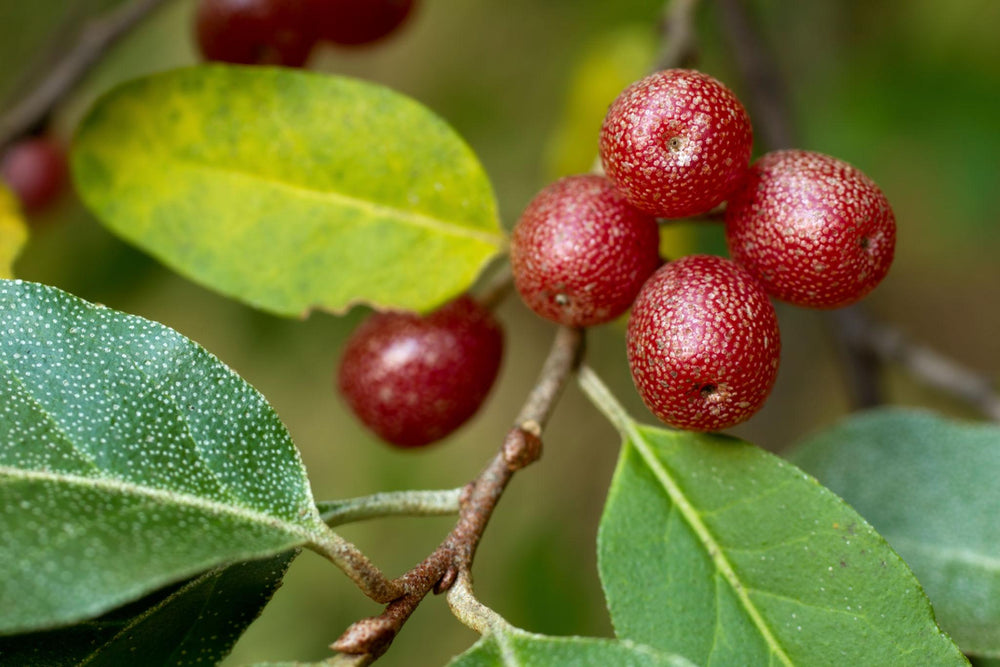
Nature's Ruby-Colored Harvest
Elaeagnus umbellata | Elaeagnaceae Family
As autumn arrives, the branches of autumn olive become adorned with tiny, ruby-red berries flecked with silver. Often found along woodland edges, fields, and coastal landscapes, this hardy shrub offers a fascinating combination of nutritional value, botanical compounds, and traditional plant knowledge.
Although considered invasive in many areas, autumn olive provides a seasonal opportunity to explore wild foods and the unique properties of both its berries and leaves.
Autumn olive has attracted interest for its antioxidant-rich berries and the naturally occurring compounds found throughout the plant.
Autumn olive berries are particularly notable for their lycopene content, alongside other carotenoids, vitamin C, phenolic acids, and flavonoids.
The leaves possess a different phytochemical profile, including various polyphenols and tannins.
These distinctions make the berries and leaves interesting botanical materials to study individually and in combination.
Autumn olive is a deciduous shrub recognizable by its silvery leaf undersides, often thorny branches, and small red berries covered in distinctive silver speckles.
Its berries typically ripen from late summer through autumn, developing a sweet-tart flavor as they mature.
Harvesting Tips:
Did You Know? Autumn olive berries can contain substantial amounts of lycopene, the red carotenoid also found in tomatoes. Their concentrations vary considerably with ripeness, growing conditions, and plant genetics.
Autumn olive berries can be incorporated into preserves, syrups, fruit sauces, and seasonal culinary preparations. Their pleasantly tart flavor pairs beautifully with other autumn fruits.
The leaves have also been explored in botanical infusions and extracts, although their safety and traditional medicinal uses are less established than the berries' culinary uses.
Coastal Root Autumn Olive Berry & Leaf Tincture: Our small-batch botanical extract brings together autumn olive berries and leaves in one thoughtfully prepared liquid formulation, highlighting the distinct plant compounds found in each part of this remarkable seasonal shrub.
Inspired by traditional botanical preparations and modern interest in plant antioxidants, it offers a convenient way to explore autumn olive as part of an intentional herbal routine.
Research into autumn olive's antioxidant properties does not establish that these benefits are delivered by the finished tincture.
Autumn olive illustrates the fascinating relationship between wild foods, plant chemistry, and seasonal harvesting. Its silvery foliage and ruby-colored berries make it unmistakable in the fall landscape.
Because this shrub spreads aggressively and can displace native vegetation, responsible management is particularly important. Harvesting should never involve intentionally spreading or cultivating it in natural habitats.
Botanical Considerations: Proper identification is essential. While ripe berries have established culinary uses, information about the safety of concentrated autumn olive leaf extracts is limited. Individuals who are pregnant, nursing, taking medications, or managing medical conditions should seek professional guidance before using concentrated botanical preparations.
At Coastal Root Co., we believe every plant has a story worth understanding—from its traditional uses and unique chemistry to its place within the surrounding ecosystem.
Rooted in tradition. Inspired by nature. Grounded in every season.
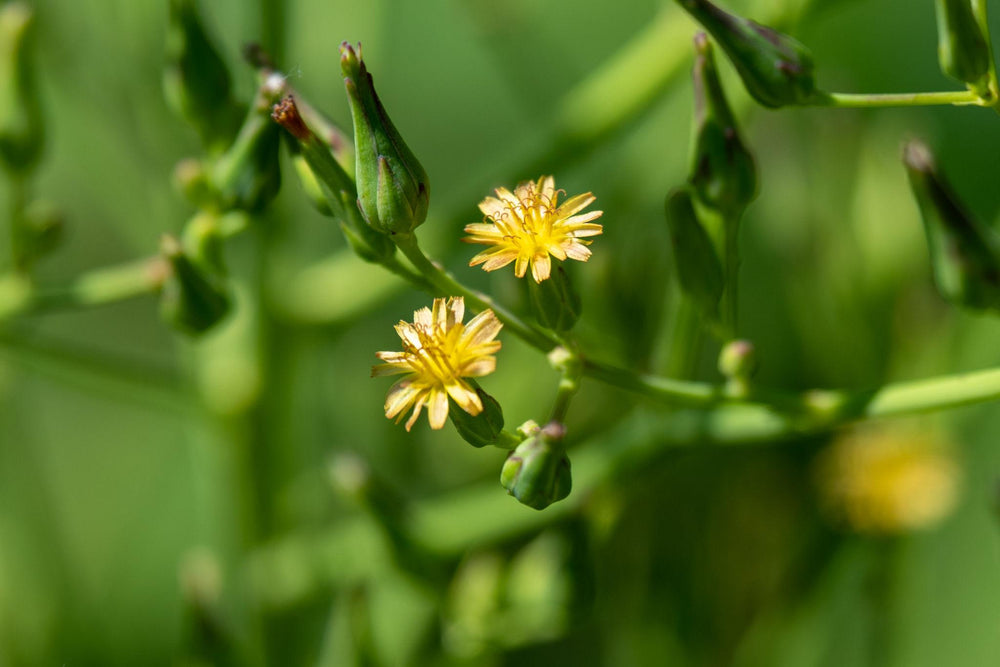
Nature's Bitter Botanical of Rest
Lactuca spp. | Asteraceae Family
Standing tall along woodland edges, open fields, and roadsides, wild lettuce is an often-overlooked botanical with a fascinating history in traditional herbal medicine. Known for the milky latex found within its stems and leaves, this unassuming plant has long been associated with relaxation, physical comfort, and restorative rest.
Several species, including Lactuca virosa and Lactuca canadensis, are commonly discussed in herbal traditions, although their chemical composition and traditional applications differ.
Wild lettuce has historically been valued for its bitter constituents and calming reputation.
These are historical applications rather than established clinical benefits. Human research supporting wild lettuce for sleep, pain, or relaxation remains limited.
Wild lettuce contains naturally occurring bitter sesquiterpene lactones, particularly lactucin and lactucopicrin, which have attracted scientific interest for their biological activity.
Its characteristic milky latex, sometimes called lactucarium, contains a mixture of plant compounds historically used in concentrated herbal preparations.
Constituent concentrations differ among species, growing conditions, and plant maturity.
Wild lettuce commonly grows in disturbed soils, sunny fields, woodland edges, and along roadsides. Depending on the species, it may reach several feet in height.
Recognizable features include:
Harvesting Tips:
Did You Know? Wild lettuce's historical nickname, "opium lettuce," reflects its traditional reputation for calming and physical comfort—not the presence of opioid compounds.
Wild lettuce has historically been prepared as herbal infusions, tinctures, and concentrated latex extracts.
Herbal Infusions: Dried leaves have been used in bitter herbal teas, although preparations vary among traditions.
Wild Lettuce Tinctures: Alcohol extraction has traditionally been used to preserve compounds from the plant's aerial portions.
Lactucarium: The plant's dried milky latex has historically been collected for concentrated preparations. Because potency can vary substantially, concentrated latex is not interchangeable with ordinary leaf preparations.
Coastal Root Wild Lettuce Tincture: Our small-batch botanical extract celebrates the traditional herbal heritage of wild lettuce in a convenient liquid format. Inspired by its longstanding association with relaxation and restorative evening rituals, it offers a thoughtful way to explore this distinctive botanical as part of a personalized herbal routine.
Follow the product's labeled directions. Wild lettuce's traditional reputation does not establish the effectiveness or safety of any particular tincture preparation.
As the growing season draws to a close, wild lettuce reflects autumn's invitation to slow down, release tension, and appreciate nature's quieter rhythms.
Its fascinating chemistry and herbal history make it a meaningful addition to our Featured Fall Botanicals collection.
Botanical Considerations: Wild lettuce can cause drowsiness and may produce adverse effects, particularly in concentrated preparations. Avoid combining it with alcohol, sedatives, or other substances that cause drowsiness. Do not use during pregnancy or nursing, and avoid driving or operating machinery after use. Individuals taking medications or managing health conditions should seek professional guidance before internal use.
At Coastal Root Co., we celebrate the remarkable plants that connect traditional herbal wisdom with the natural world around us.
Rooted in tradition. Inspired by nature. Grounded in every season.
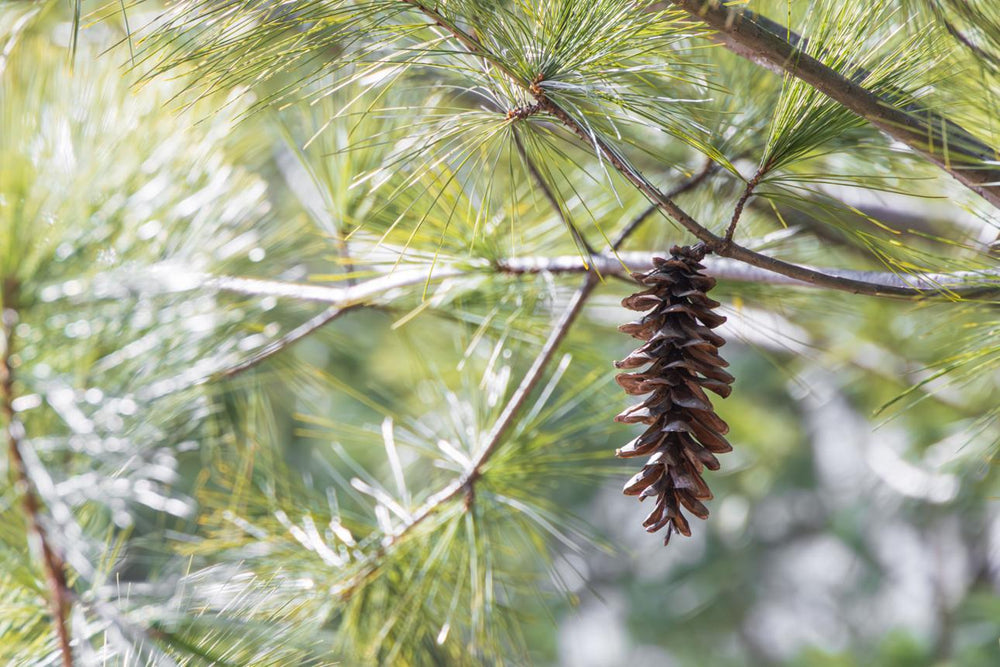
Evergreen Wisdom Through the Seasons
Pinus strobus | Pinaceae Family
As autumn gives way to winter, Eastern White Pine remains a vibrant symbol of resilience and renewal. With its soft, feathery needles and distinctive evergreen fragrance, this majestic native tree has a rich history in traditional herbal practices, woodland remedies, and seasonal wellness traditions.
Long valued by Indigenous communities of northeastern North America, Eastern White Pine offers a fascinating connection between botanical nourishment, aromatic plant compounds, and the natural world.
Eastern White Pine has historically been valued for its aromatic needles, resin, and other botanical properties.
These uses reflect historical traditions and botanical research. Clinical evidence supporting specific health benefits of Eastern White Pine preparations remains limited.
Eastern White Pine contains an interesting variety of naturally occurring compounds, including vitamin C, polyphenols, flavonoids, and aromatic terpenes.
Its volatile constituents contribute to the distinctive evergreen fragrance associated with pine forests. The exact composition varies among needles, bark, resin, and other plant parts.
Eastern White Pine is native to northeastern North America and is commonly found in forests, woodland edges, and suitable coastal landscapes.
One of its most distinctive characteristics is its soft, slender needles growing in bundles of five.
Harvesting Tips:
Did You Know? Eastern White Pine can retain its needles for multiple years, providing year-round greenery and valuable shelter for wildlife.
Eastern White Pine has been incorporated into several traditional botanical preparations.
Pine Needle Tea: Properly identified needles have historically been steeped in hot water to create an aromatic evergreen infusion.
Aromatic Steam Rituals: Pine's distinctive fragrance has traditionally been appreciated in steam and woodland-inspired seasonal practices.
Pine-Infused Oils & Salves: Pine resin and appropriately prepared botanical materials have historically been used in external skin-care preparations.
Botanical Extracts: Pine needles may also be preserved through extraction methods that cap
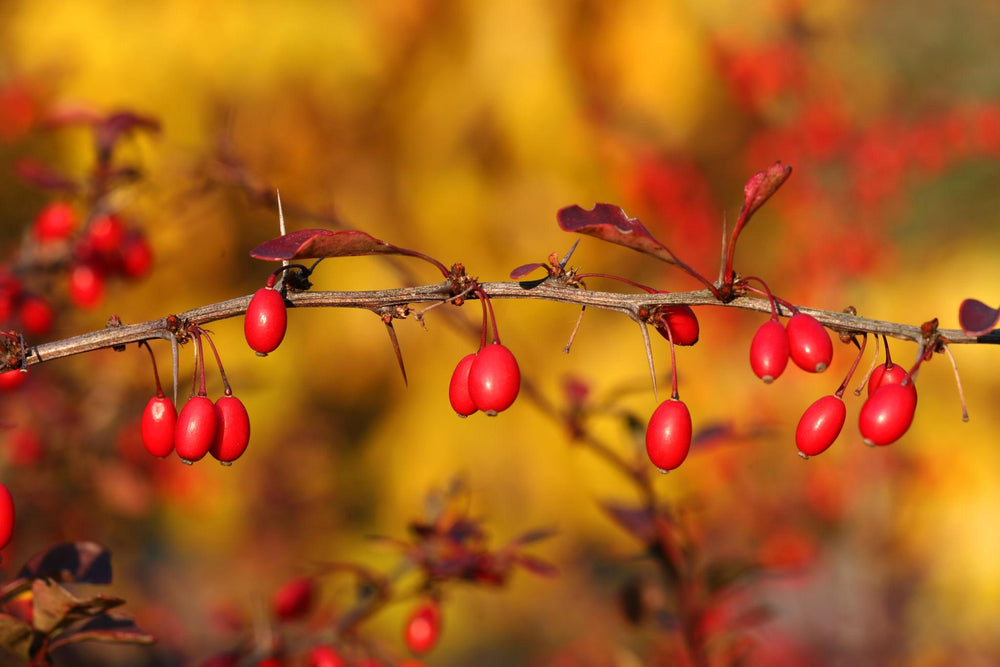
The Crimson Botanical of Autumn
Berberis thunbergii DC. | Berberidaceae Family
With brilliant crimson foliage, delicate thorny branches, and bright red berries, Japanese Barberry brings striking color to the autumn landscape. Beyond its beauty, this resilient shrub belongs to the Berberis genus, a family with a centuries-old history in traditional herbal medicine.
Particularly fascinating is its collection of naturally occurring plant alkaloids, including berberine and berbamine, which continue to attract scientific interest for their biological properties.
Various barberry species have historically been valued in herbal traditions associated with digestion, metabolic wellness, and botanical vitality.
These historical applications and scientific findings involve various Berberis species or isolated compounds. They are not established clinical benefits of Japanese Barberry or its finished preparations.
Japanese Barberry contains a fascinating variety of naturally occurring alkaloids, including:
Interestingly, research comparing several Berberis species found substantially higher concentrations of berbamine than berberine in their leaves.
The concentration and composition of these compounds vary significantly by plant part, growing conditions, and extraction method.
Japanese Barberry is a deciduous shrub recognizable by its thorny branches, small rounded or spoon-shaped leaves, and elongated red berries that often remain visible after the foliage falls.
Its leaves may turn brilliant shades of crimson, orange, and burgundy in autumn.
Harvesting Considerations:
Did You Know? Japanese Barberry is considered invasive in New Jersey. Its ability to form dense thickets can displace native vegetation, making responsible management especially important.
Different species of barberry have historically been incorporated into bitter herbal extracts, tinctures, and other botanical preparations.
Traditional Herbal Extracts: Roots, bark, and other plant parts from certain barberry species have been used in historical herbal traditions.
Botanical Tinctures: Alcohol extraction is one method used to preserve selected constituents from properly identified botanical material.
Plant-Part Research: Berries, leaves, stems, and roots possess different chemical profiles. Their traditional applications, safety considerations, and suitability for extraction should be evaluated individually.
Coastal Root Japanese Barberry: Our small-batch botanical offering celebrates the remarkable chemistry and herbal heritage of Japanese Barberry. Inspired by the longstanding traditions surrounding the Berberis family, it invites a deeper appreciation of this distinctive autumn plant and its naturally occurring constituents.
Explore Coastal Root Japanese Barberry and sign up for availability notifications to stay informed about our seasonal offering.
Japanese Barberry represents the fascinating intersection of traditional plant knowledge, modern phytochemical research, and responsible stewardship of the natural world.
Its vibrant fall colors and unusual alkaloid composition make it an intriguing addition to our Featured Fall Botanicals collection.
Botanical Considerations: Japanese Barberry contains biologically active compounds, and the safety of concentrated preparations depends on the species, plant part, and extraction method. Berberine-containing products can interact with medications and should not be used during pregnancy or breastfeeding. Safety information from other barberry species should not automatically be applied to Japanese Barberry.
At Coastal Root Co., we believe understanding a plant means appreciating its traditional history, chemical complexity, and place within the surrounding ecosystem.
Rooted in tradition. Inspired by nature. Grounded in every season.
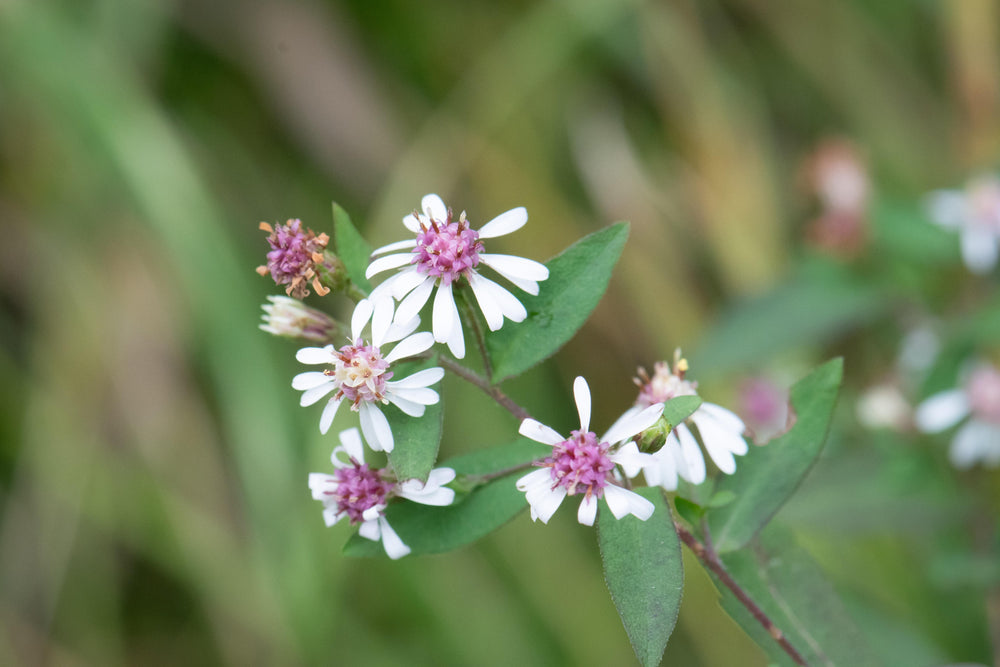
The Delicate Wildflower of Autumn
Symphyotrichum lateriflorum | Asteraceae Family
As autumn settles across the landscape, Calico Aster brings delicate beauty to woodland edges, meadows, and coastal habitats. Its clusters of tiny white flowers, with centers that gradually transition from golden yellow to rosy purple, create a beautiful tapestry of late-season color.
Also known as Side-Flowering Aster or White Woodland Aster, this native perennial holds a place in North American botanical history and is especially valued for its contribution to autumn's pollinator communities.
Calico Aster has a history of medicinal use among Indigenous peoples of North America, although detailed, species-specific documentation and modern clinical studies remain limited.
Unlike more extensively studied medicinal herbs, specific antioxidant, anti-inflammatory, calming, or pain-relieving effects have not been established for Calico Aster preparations.
Calico Aster belongs to the same botanical family as Goldenrod, Chamomile, and Calendula.
Its small composite flowers contain numerous individual florets. As the flower heads mature and are pollinated, their centers develop the distinctive reddish-purple coloration that gives the plant its common name.
Although related aster species have been examined for various phytochemicals, Calico Aster's own constituent profile requires more research before specific therapeutic properties can be confidently described.
Calico Aster commonly grows along woodland edges, streambanks, fields, and partially shaded habitats throughout eastern North America.
Key Identification Features:
Harvesting Considerations:
Did You Know? Calico Aster receives its name from the mixture of pale and reddish-purple flower centers visible across its branches, resembling the varied colors of calico fabric.
Calico Aster offers an opportunity to explore lesser-known North American botanicals and the traditional methods used to preserve seasonal plants.
Herbal Infusions: Asters have appeared in historical herbal practices, although reliable preparation and safety information specific to Calico Aster is limited.
Botanical Tinctures: Alcohol extraction can be used to study and preserve selected plant constituents. However, extraction does not establish that a preparation is safe or effective for internal use.
Coastal Root Calico Aster: Our small-batch botanical offering reflects our appreciation for native plants, traditional herbal knowledge, and the remarkable diversity of our coastal landscapes.
Explore Coastal Root Calico Aster and sign up for availability notifications to learn more about this distinctive seasonal botanical.
As many summer flowers fade, Calico Aster continues providing resources for native pollinators preparing for winter.
Its delicate flowers support a wide variety of insects, while its presence contributes to the biodiversity of woodland edges, meadows, and naturalized habitats.
Botanical Considerations: Research on the safety of internal Calico Aster preparations is limited. Historical use should not be interpreted as proof of safety. Individuals sensitive to the Asteraceae family should exercise caution, and concentrated preparations should not be used internally without appropriate safety evaluation.
At Coastal Root Co., we believe that even the smallest wildflowers have extraordinary stories to tell. Calico Aster reminds us that nature's quietest offerings are often among its most beautiful.
Rooted in tradition. Inspired by nature. Grounded in every season.

GATHER • PREPARE • NOURISH
Seasonal recipes, wild harvests & comforting traditions to nourish the cooler days.

A grounding bowl with broth, roots, herbs, fire cider, and fall tincture pairings.

• 1 to 2 cups warm bone broth, chicken broth, or vegetable broth
• Roasted carrots, squash, sweet potato, mushrooms, or potatoes
• Cooked rice, quinoa, noodles, or beans
• Fresh thyme, rosemary, sage, or parsley
• Squeeze of lemon
• Splash of Coastal Root Fire Cider, or apple cider vinegar for a gentler version
• A few droppers of Coastal Root Dandelion Root Tincture, Burdock Root Tincture, or Turmeric & Black Pepper Tincture
1. Warm broth gently.
2. Add roasted vegetables, mushrooms, and cooked grains, potatoes, noodles, or beans.
3. Stir in fresh herbs.
4. Add a small splash of Coastal Root Fire Cider if desired.
5. Remove from high heat before adding tincture.
6. Add a few drops of Coastal Root Dandelion Tincture, Burdock Root Tincture, or Turmeric & Black Pepper Tincture.
7. Sip or eat warm.
This recipe is meant to feel like a bridge between food and ritual. Warm broth, roots, mushrooms, herbs, Fire Cider, and fall tinctures create a deeply grounding bowl.
Dandelion Root and Burdock Root fit beautifully here because they match the earthy, bitter, root-based feeling of fall. Turmeric & Black Pepper is the better choice when you want a warmer, spicier broth bowl with more heat and depth.

A grounding fall skillet with honey mushrooms, roots, herbs, Fire Cider, and Garlic Honey.

• Honey mushrooms, cleaned
• Water for boiling
• Cooked potatoes, sweet potatoes, or roasted squash
• Butter, olive oil, or bacon fat
• Onion
• Garlic
• Fresh thyme, rosemary, or sage
• Pinch of sea salt
• Cracked black pepper
• Splash of Coastal Root Fire Cider, or apple cider vinegar
• Drizzle of Coastal Root Garlic Honey, or raw honey
1. Clean the honey mushrooms carefully.
2. Boil the honey mushrooms for 10 minutes.
3. Drain and discard the boiling water.
4. In a skillet, warm butter, olive oil, or bacon fat.
5. Add potatoes, sweet potatoes, or squash and cook until browned.
6. Add the boiled and drained honey mushrooms.
7. Add onion, garlic, herbs, salt, and pepper.
8. Continue cooking until the mushrooms and roots are golden and well combined.
9. Finish with a small splash of Coastal Root Fire Cider for brightness.
10. Add a light drizzle of Coastal Root Garlic Honey for a savory-sweet fall finish.
Honey mushrooms are earthy, hearty, and deeply fall-coded. Paired with roots, herbs, vinegar, and a little sweetness, they become exactly the kind of grounding seasonal food that belongs in the Fall Grounding Collection.
They hold their texture well, which makes them especially nice in hashes, skillet meals, soups, and fall vegetable dishes.

A savory seasonal mushroom skillet with garlic, herbs, fire cider, and garlic honey.

• Fresh Chicken of the Woods, cleaned and sliced
• Butter
• Bacon fat or olive oil
• Garlic, minced
• Pinch of sea salt
• Cracked black pepper
• Fresh thyme or rosemary
• Splash of Coastal Root Fire Cider, or apple cider vinegar
• Drizzle of Coastal Root Garlic Honey, or raw honey
1. Clean and trim the Chicken of the Woods, using the most tender portions.
2. Heat butter and a small amount of bacon fat or olive oil in a skillet.
3. Add the mushrooms and cook slowly until moisture releases and the edges begin to turn golden.
4. Add garlic, salt, pepper, and herbs.
5. Continue cooking until the mushrooms are deeply golden and tender.
6. Finish with a tiny splash of Coastal Root Fire Cider for brightness.
7. Add a light drizzle of Coastal Root Garlic Honey for a savory-sweet finish.
8. Serve warm with eggs, roasted vegetables, potatoes, rice, sourdough, chicken, or as part of a fall harvest plate.
When Chicken of the Woods is young and tender, it can have a texture that feels surprisingly close to chicken. This recipe is simple on purpose—fat, heat, salt, garlic, and time let the mushroom become the centerpiece.

A savory-sweet fall dinner using Garlic Honey and Fire Cider.

This recipe brings together everything we love about fall cooking: warmth, crisp edges, savory garlic, a little sweetness, a little vinegar, and that grounding feeling of a meal that actually satisfies.
The Brussels sprouts can be roasted in the oven or cooked in the air fryer until golden and crisp, then tossed with a simple Garlic Honey and Fire Cider glaze. The chicken can be cooked separately and finished with the same glaze, or everything can be served together as a warm fall bowl.
• 1 to 1 1/2 pounds chicken breast, thighs, or tenders
• 1 pound Brussels sprouts, trimmed and halved
• 2 tablespoons olive oil, avocado oil, butter, or bacon fat
• 1 tablespoon Coastal Root Garlic Honey, or raw honey
• 1 tablespoon Coastal Root Fire Cider, or apple cider vinegar for a gentler version
• 1 teaspoon Dijon mustard
• Fresh thyme, rosemary, or sage
• Pinch of sea salt
• Cracked black pepper
• Pinch of cayenne or chili flakes
• Cooked rice, quinoa, potatoes, or roasted squash for serving
1. Preheat oven to 400°F, or preheat air fryer according to your appliance directions.
2. Toss Brussels sprouts with oil, sea salt, and cracked black pepper.
3. Roast or air fry until golden, crisp at the edges, and tender inside.
4. While the Brussels sprouts cook, season chicken with salt, pepper, and thyme, rosemary, or sage.
5. Cook chicken in a skillet with olive oil, avocado oil, butter, or bacon fat until golden and fully cooked.
6. In a small bowl, whisk together Coastal Root Garlic Honey, Coastal Root Fire Cider, Dijon mustard, and cayenne or chili flakes.
7. Pour a small amount of the glaze over the cooked chicken and let it coat the chicken for the last minute or two of cooking.
8. Toss the crispy Brussels sprouts with the remaining glaze while they are still warm.
9. Serve chicken and Brussels sprouts together as a simple dinner, or layer over rice, quinoa, roasted potatoes, or squash for a grounding fall bowl.
This is the kind of recipe that turns seasonal wellness into a real meal. Garlic Honey brings savory sweetness, Fire Cider adds brightness and heat, and crispy Brussels sprouts bring that deep, roasted fall flavor.
For a gentler version, use apple cider vinegar instead of Fire Cider. For a bolder seasonal version, use Fire Cider and finish with an extra drizzle of Garlic Honey right before serving.
For a warmer, deeper fall profile, stir a few drops of Coastal Root Turmeric & Black Pepper Tincture into the glaze after it comes off direct heat. It layers naturally with chicken, Brussels sprouts, Garlic Honey, and Fire Cider without changing the recipe into a supplement routine.

A bold mocktail using Fire Cider and Black Pepper Tincture.

• 4 to 6 ounces tomato juice
• 1 to 2 teaspoons Coastal Root Fire Cider
• A few drops Coastal Root Black Pepper Tincture
• Squeeze of lemon
• Dash of Worcestershire sauce
• Pinch of celery salt or sea salt
• Cracked black pepper
• Horseradish
• Pickle juice, olive brine, or sauerkraut brine
• Garnish with celery, olives, pickles, lemon, herbs, or a pickled vegetable
1. Add tomato juice, Coastal Root Fire Cider, lemon, salt, pepper, horseradish, Worcestershire, and brine to a glass.
2. Add a few drops of Coastal Root Black Pepper Tincture.
3. Stir well.
4. Taste and adjust with more Fire Cider for heat, more lemon for brightness, or more brine for depth.
5. Serve over ice or sip at room temperature.
6. Garnish with celery, olives, pickles, herbs, or seasonal vegetables.
This is a creative way to use Fire Cider beyond the spoon. It brings together tomato, vinegar, heat, pepper, salt, herbs, and brine in a bold seasonal drink that feels savory, grounding, and alive.
Using Black Pepper Tincture in place of vodka keeps the ritual botanical while still giving the drink depth, warmth, and bite.

A tart fall shrub with autumn olive, fire cider, garlic honey, and autumn olive berry & leaf tincture.

• 1 cup autumn olive berries, cleaned
• 1/2 cup apple cider vinegar
• 1 to 2 tablespoons Coastal Root Fire Cider
• 1 to 2 tablespoons Coastal Root Garlic Honey, or raw honey
• Small piece of fresh ginger
• Cinnamon stick
• Squeeze of lemon
• A few droppers of Coastal Root Autumn Olive Berry & Leaf Tincture
1. Add autumn olive berries, apple cider vinegar, Fire Cider, ginger, and cinnamon to a small jar.
2. Cover and let infuse in the refrigerator for 2 to 5 days.
3. Mash the berries gently.
4. Strain.
5. Stir in Coastal Root Garlic Honey or raw honey to taste.
6. Add a few droppers of Coastal Root Autumn Olive Berry & Leaf Tincture after straining.
7. Add a splash to sparkling water, warm water, tea, cider, mocktails, marinades, or salad dressing.
Autumn olive brings a tart, wild fall flavor that pairs beautifully with Fire Cider. This shrub is bright, warming, and seasonal — a way to preserve a little fall in a jar without making the recipe feel ordinary.
To make this more of a full-spectrum autumn olive wellness ritual, add a few drops of Coastal Root Autumn Olive Berry & Leaf Tincture after the shrub is strained and off heat. The berry brings the tart, fruit-forward, lycopene-rich profile, while the leaf adds a greener, more herbaceous, antioxidant-focused side of the plant.

A simple evergreen tea for fall and winter.

• 1 small handful clean eastern white pine needles
• 8 to 12 ounces hot water
• Lemon slice
• Coastal Root Garlic Honey, or raw honey
1. Positively identify eastern white pine by its soft needles in bundles of five.
2. Rinse the needles gently.
3. Chop the needles to release their aroma.
4. Place chopped needles in a mug or jar.
5. Pour hot water over the needles.
6. Cover and steep for 10 to 15 minutes.
7. Strain.
8. Add lemon and Coastal Root Garlic Honey or raw honey.
This tea is simple, woodsy, and deeply seasonal. Eastern white pine stays green when much of the landscape goes quiet, making it a beautiful fall and winter ritual.
Use only pine needles you can identify with complete confidence.

A bright late-season tea with goldenrod, autumn olive, lemon, and honey.

• 2 droppers full of Coastal Root Goldenrod Tincture or 1 teaspoon dried goldenrod
• 6 droppers full of Coastal Root Autumn Olive Berry & Leaf Tincture or 1 tablespoon autumn olive berries, fresh or dried
• 8 to 12 ounces hot water
• Lemon slice
• Coastal Root Garlic Honey, or raw honey
• A few droppers Coastal Root Autumn Olive Berry & Leaf Tincture
1. Add goldenrod and autumn olive (tincture or fresh/dried) to a mug or jar.
2. Pour hot water over the herbs and berries.
3. If using fresh ingredients, cover and steep for 10 to 15 minutes.
4. Strain.
*If using tinctures no need to steep or strain, we’ve already harvested the amazing properties.
5. Add lemon and Coastal Root Garlic Honey or raw honey.
6. Add a few droppers of Coastal Root Autumn Olive Berry & Leaf Tincture after steeping.
This tea feels like the edge of fall: golden, tart, bright, and earthy. Goldenrod brings the late-season field note, while autumn olive adds a tart berry profile and a deeper fall character.
Fall care includes the furry ones, too.
As the weather cools, many dogs are moving differently, shedding differently, sleeping more, feeling stiffer, or spending more time inside. This simple topper brings together familiar protein, pumpkin, root vegetables, and fall-inspired add-ins while keeping the base plain and dog-friendly.
• 1/4 cup plain cooked chicken, turkey, or fish
• 1 tablespoon plain pumpkin puree (100% pumpkin only — not pumpkin pie filling)
• 1 tablespoon lightly steamed carrot or sweet potato
• 1 teaspoon plain cooked oats
• 1 teaspoon bone broth
• A few fresh or frozen cranberries, finely chopped
• Tiny pinch of freshly grated ginger
1. Finely chop or shred plain cooked chicken, turkey, or fish.
2. Mix with pumpkin, carrot or sweet potato, oats, bone broth, cranberries, and ginger.
3. Add a small splash of warm water if needed.
4. Serve as a small topper over your dog’s regular meal.
This is meant to be a small topper, not a full meal replacement. Use plain, cooked, boneless, skinless, unseasoned chicken, turkey, or fish only.
Do not use: onion, garlic, chives, salt, butter, gravy, stuffing, cooked bones, turkey skin, pumpkin pie filling, pumpkin spice products, Fire Cider, Garlic Honey, essential oils, wild foraged mushrooms, human supplements with xylitol, sweeteners, flavorings, or unsafe additives.
Fall is a natural time for pet owners to look deeper.
Cooler weather, more indoor time, damp mornings, seasonal stiffness, shedding, heavier foods, and immune-season concerns can all make fall a good time to reassess what support your dog may need.
Some fall-inspired pup wellness ingredients people may explore include:
• Medicinal Mushrooms such as Turkey Tail, Reishi, Maitake, Shiitake, or Lion’s Mane for immune, aging, and whole-body wellness research
• Boswellia for joint and mobility support research
• Slippery Elm for occasional digestive soothing research
• Marshmallow Root for mucilage-rich digestive and throat comfort research
• Pumpkin Seed for seasonal food-based mineral and parasite-related research
• Omega-3 Fish Oil for skin, coat, joint, and inflammatory response support
• Astaxanthin for antioxidant and aging-support research
• Colostrum for immune and gut barrier support research
• Quercetin with Nettle for seasonal allergy-style research
• Probiotics or Spore-Based Probiotics for gut and immune-season research
• Cranberry for urinary tract wellness research
• Ginger for digestion and warming seasonal support
• Bone Broth for gentle nourishment, minerals, and food-based support
Medicinal mushrooms are especially interesting for fall because they fit the season naturally. For dogs, this should mean properly sourced mushroom products made for pets, not wild mushrooms from the yard.
For Coastal Root, fall pet wellness can be thought of this way:
Start with food.
Add warmth.
Support the gut.
Support mobility before winter.
Think about mushrooms.
Respect stronger herbs.
Research deeply.
Introduce one thing at a time.
Not every dog needs every supplement. The goal is not to throw the whole cabinet into the bowl. The goal is to help pet owners think more intentionally about seasonal support.
As autumn settles in, cooler temperatures, damp mornings, fallen leaves, and changing outdoor conditions bring new considerations for our four-legged companions. Whether your pup loves exploring wooded trails, wandering through the backyard, or curling up beside you after a long day, a little seasonal care can go a long way.
At Coastal Root Co., we believe our furry family members deserve the same thoughtful, intentional approach to everyday wellness that we embrace for ourselves.
Cooler air, rough terrain, and changing humidity can leave paw pads, noses, and other exposed areas feeling dry.
Coastal Root Pet Care — Rescue Balm: Our rich, moisturizing balm is designed for paw pads, noses, elbows, and dry spots. Made with nourishing ingredients including beeswax, shea butter, and botanical oils, it helps maintain a soft, moisturized feel while supporting everyday skin comfort.
Autumn walks can bring muddy paws, damp coats, fallen leaves, and unexpected hitchhikers. A simple post-adventure routine helps keep your companion clean, fresh, and comfortable.
Coastal Root Pet Care — Coat Wash: Our dog shampoo is designed for routine bath care, helping wash away dirt, debris, and everyday buildup after outdoor adventures. A thoughtful addition to your pup's grooming routine, Coat Wash helps leave the coat feeling clean and refreshed. Gently massage into a wet coat, avoiding the eyes and ears, and rinse thoroughly.
Coastal Root Pet Care — Clear Ears & Fresh Ears: A complementary ear-care pairing for routine external ear cleaning and grooming. Clear Ears helps clean the visible outer ear, while Fresh Ears Powder can be incorporated into the routine as directed once the ear is clean and dry.
Autumn is a wonderful time to explore, but wooded trails, leaf piles, and grassy areas can still harbor ticks, irritating plants, and other outdoor hazards.
As daylight shortens and temperatures drop, our pets may appreciate a little extra warmth, freshness, and consistency.
Create a cozy resting area away from cold drafts, maintain familiar feeding and exercise routines, and provide soft bedding that stays clean and dry.
With more time spent indoors, keeping pet beds, blankets, crates, and favorite lounging spots fresh becomes an important part of maintaining a welcoming home. Regular washing, vacuuming, and refreshing soft surfaces can help manage everyday odors while keeping your pup's favorite spaces inviting.
Senior dogs may especially appreciate supportive bedding, nonslip surfaces, shorter walks, and a warm, freshly maintained place to rest after outdoor activity.
Coastal Root Pet Care — Fresh Nest Bedding Refresher: A botanical-inspired refresher designed to bring a clean, welcoming feel to your pup's favorite spaces. Fresh Nest helps refresh dog beds, blankets, crates, and vehicle interiors between regular cleanings. Simply use as directed on suitable fabrics, allowing surfaces to dry completely before your furry companion settles back in. Do not spray directly on pets, and avoid use around cats.
A Coastal Root Reminder: Seasonal wellness doesn't have to be complicated. Sometimes the simplest rituals—clean paws, a comfortable coat, fresh bedding, a nourishing meal, and a warm place beside the family—are the ones that matter most.
Thoughtful care. Happy paws. Rooted in every season.
No FAQs found. Try another search or category.


